Archive | Reviews

The EDC Tool Roll: Nebo Tools Work Lights

The EDC Tool Roll is a feature on Jerking the Trigger in which we profile various every day carry worthy tools. The tools shown aren’t multi-tools but rather real tools, that by virtue of their compact size, light weight, usefulness, or unique functionality, can find a place in any range kit, emergency kit, or every day carry bag.

Feel free to comment on the tools that you carry so we can all learn! The discussion on these posts has been very valuable so far.


The EDC Tool Roll series has generated more reader email than just about anything that has ever been on the pages of JTT. You’ve really come through for me with recommendations. Several emails have asked when I was going to include a flashlight in this series and I typically responded that I was hesitant to do so because I think most of us are already carrying a flashlight. Reader James R. changed my mind when he showed me the Nebo Tools series of pocketable work lights. I wish I would have known about these years ago.
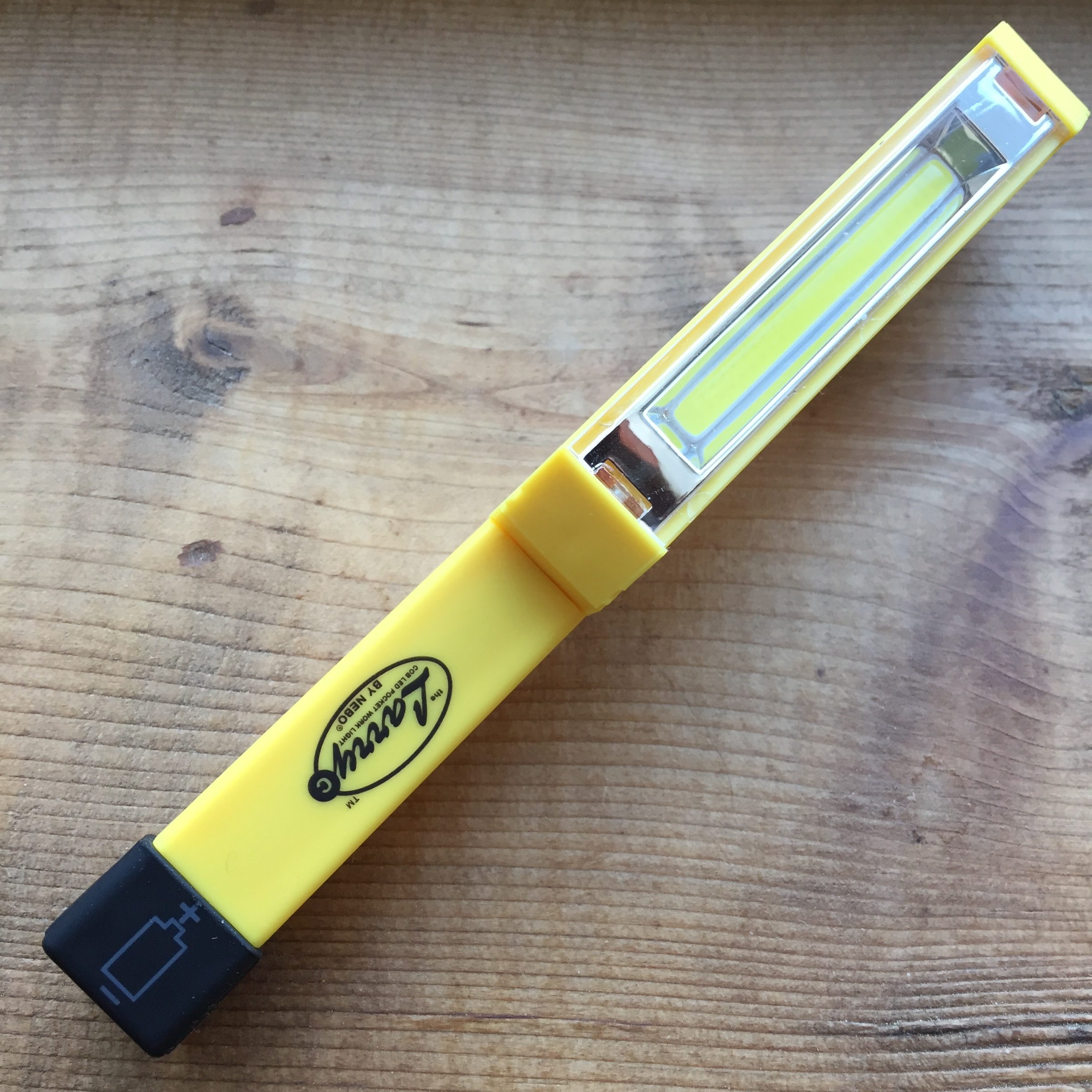
To call these lights “flashlights” does them a disservice. They really have more in common with your typical work light that you would find on a small stand or tripod… except these fit in you pocket or small tool kit. Like a work light, they are designed to be used hands free. You can obviously hold them in your hand but they really work best out of your hands.

They have a rotating pocket clip that allows you to clip the light to your clothing (shirt pocket, collar, etc.) for hands free use and then aim it where you need it. The clip is also magnetic so it can cling to ferrous surfaces like your vehicle, your tool chest, or even the 74″ PTO snow blower that are getting ready for winter (ask me how I know). They can be stood on end on a level surface.

Here is a trick I figured out that is probably the most versatile way these can be used. I’ve found that I can stick them to a steel tool as ballast so that I can place it on any surface without worrying about it tipping over. I can direct it anywhere I need it in this configuration. It works really well when stuck to a handgun magazine on the range if you need to light up an admin area during low light training and it takes up about the same amount of room as a marker in your range bag.

A long, wide LED emits 170 lumens of light. This ribbon like emitter is used, rather than a smaller point of light in the center of an optic or reflector, to create a wall of light with no discernible hotspot. It lights up a room evenly from a distance or can be used to light up your work piece up close without washing out thanks to the lack of hotspot. I get about 3(ish) hours of continuous runtime before I swap batteries.

There are a number of similar lights on the market and, honestly, it can be hard to tell which ones are decent so I was happy to have a direct recommendation of the Nebo Tools line. They are dirt cheap ($7-8 a piece for the model shown) and seem to be of decent quality. They also have a solid review history.

The lights shown in this review are the Larry C model. They take 3 AAA batteries and are fairly compact but they are long(ish) since the batteries are installed end to end. They just barely fit in my tool kit. There are a number of other lights in this format with different battery configurations offered by Nebo Tools including more compact models that take two batteries.

Where to Buy: I’ve seen similar lights at some brick and mortar hardware stores. I purchased mine at Amazon because that was the easiest place I could find the Nebo Tools brand that was recommended to me. I purchased a 3 pack for just over $7 a piece ($21.01 total) including batteries!

Nebo Tools Larry C 3 Pack on Amazon (this is an affiliate link)

These lights are available in a variety of colors, battery configurations, and bulk packs (this is an affiliate link).

Alternatives: Similar lights are available from a number of brands – just make sure you don’t overpay and that they will work hands-free all the ways you need them to. You could also use the EDC light you are already carrying.


Do you have a compact work light or other tool that want to recommend? Tell us about it below.

Bargain or Just Cheap? – ESEE Avispa and Zancudo

Welcome to Bargain or Just Cheap? This series reviews budget friendly knives for a variety of uses in a short format. All of the knives will cost less than $50 (in most cases, much less) and will be purchased out of my own pocket. I’ll buy them, carry them, and use them in an attempt to determine if the knife is a bargain or just cheap.


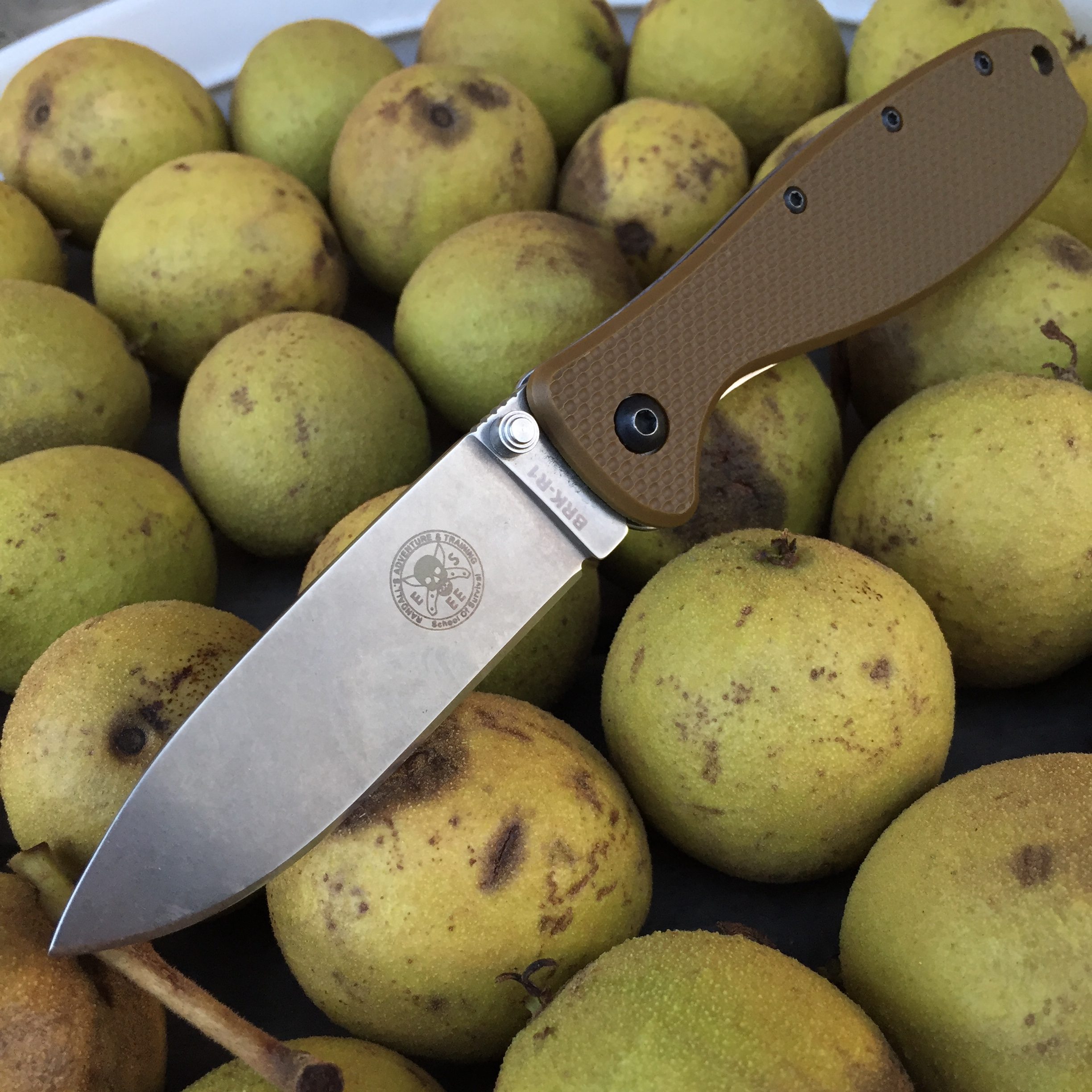
If you are a manufacturer planning to create a budget knife, pay careful attention to what ESEE has done with the Avispa and Zancudo. They’ve kept cost down by getting the important things right and careful material selection. I’ll let the cat out of the bag right up front. These knives are great.

ESEE Avispa D2

Avispa Specs:

Lock: Steel frame lock

Pocket Clip: Left or right, tip up or down

Steel: AUS 8 or D2

Handle: Textured FRN front, steel back

Blade length: 3.5 in.

Blade thickness: .11 in.

Open length: 8.5 in.

Weight: 4.51 oz.

Zancudo Specs:

Lock: Steel frame lock

Pocket Clip: Right pocket only, tip up or down

Steel: AUS 8 or D2

Handle: Textured FRN front, steel back

Blade length: 2.94 in.

Blade thickness: .09 in.

Open length: 7 in.

Weight: 3.06 oz

Observations from Use

Both of these knives do a great job of getting the important things right which leads to knives with great performance and high perceived quality. It is obvious that care goes into ensuring that things like the frame lock, detent, grinds, and ergonomics are dialed in on these knives.

Both knives flick open with ease. They have positive detents and smooth bronze phosphor washers paired with thumb studs that are well placed and easy to find with your thumb. My examples were smooth right out of the box and became even smoother with some use and the tiniest drop of oil on each washer.

I’ve been able to handle several of these knives over the years and they all have incredibly consistent lock up. The frame lock contacts the blade tang at about 75-80% lock up. There is no blade play and plenty of room left to wear in with use. These are well executed frame locks.

These knives cut extremely well! The blades on both knives feature a similar profile. They are drop points with full height flat grinds. The point drops to the center of the blade so much that this is nearly a spear point shape. They cut aggressively thanks to their thinner blade stock and excellent geometry.

Both knives are offered with two steel options: D2 and AUS 8. Flip a coin. They are both good. The AUS 8 is stainless and very easy to sharpen at the cost of some edge holding performance. D2 is a carbon steel (very rust resistant compared to most carbon steels). It offers great edge holding but can be tricky for some people to sharpen. The knives are a good value with AUS 8 steel and an incredible value with D2. It is hard to find other knives with similarly high performance steels at this price.

The FRN scales offers good texture without being tough on your pockets and they are available in about a million color options. Both knives have full steel liners under the FRN scale. The liner is drilled with a series of holes to reduce weight on the Avispa. I wish the same steps were taken with the Zancudo. It could have been a truly lightweight knife.

The ergonomics on both knives are great. The Avispa feels large and hand filling even though it is actually quite slim. The Zancudo is actually smaller than a Spyderco Delica in nearly every dimension yet it still manages to offer a grip that all four fingers will fit and a longer cutting edge. That is truly incredible as someone who has been carrying a Delica for more than 15 years. They fit your hand, are slim in the pocket, and are large enough to do real work.

They’re good but not perfect. The FRN scales can tend to flex away from the steel liner a bit which is a little annoying. The pocket clips will ride directly on the frame lock bar if you switch them around for right pocket tip up carry which can make one handed closing difficult (though still doable). Those are pretty minor gripes considering that even the D2 version of this knife comes in at well under $40.

ESEE Zancudo D2

Bargain or Just Cheap?

The ESEE Avispa and Zancudo may lack gimmicks, flash, and pretense. However, they more than make up for it with cutting performance, ergonomics, and value. There is no doubt. These knives are BARGAINS.

Amazingly, the D2 version of these knives tends to cost only $4-5 more than the AUS 8 version and they are still less than $40. If you are feeling flushed with cash, there are D2 and Carbon Fiber options that still come in under $50!

I am using Amazon as the price base line for this series. All knives were purchased by me from Amazon:

ESEE Avispa on Amazon

ESEE Zancudo on Amazon


Our goal is to represent knives for a variety of uses from EDC, to outdoor, to tactical knives. Do you have a favorite affordable knife? Let us know about it in the comments!

Hill People Gear Kit Bag or GunfightersINC Kenai Chest Holster – Get Both!

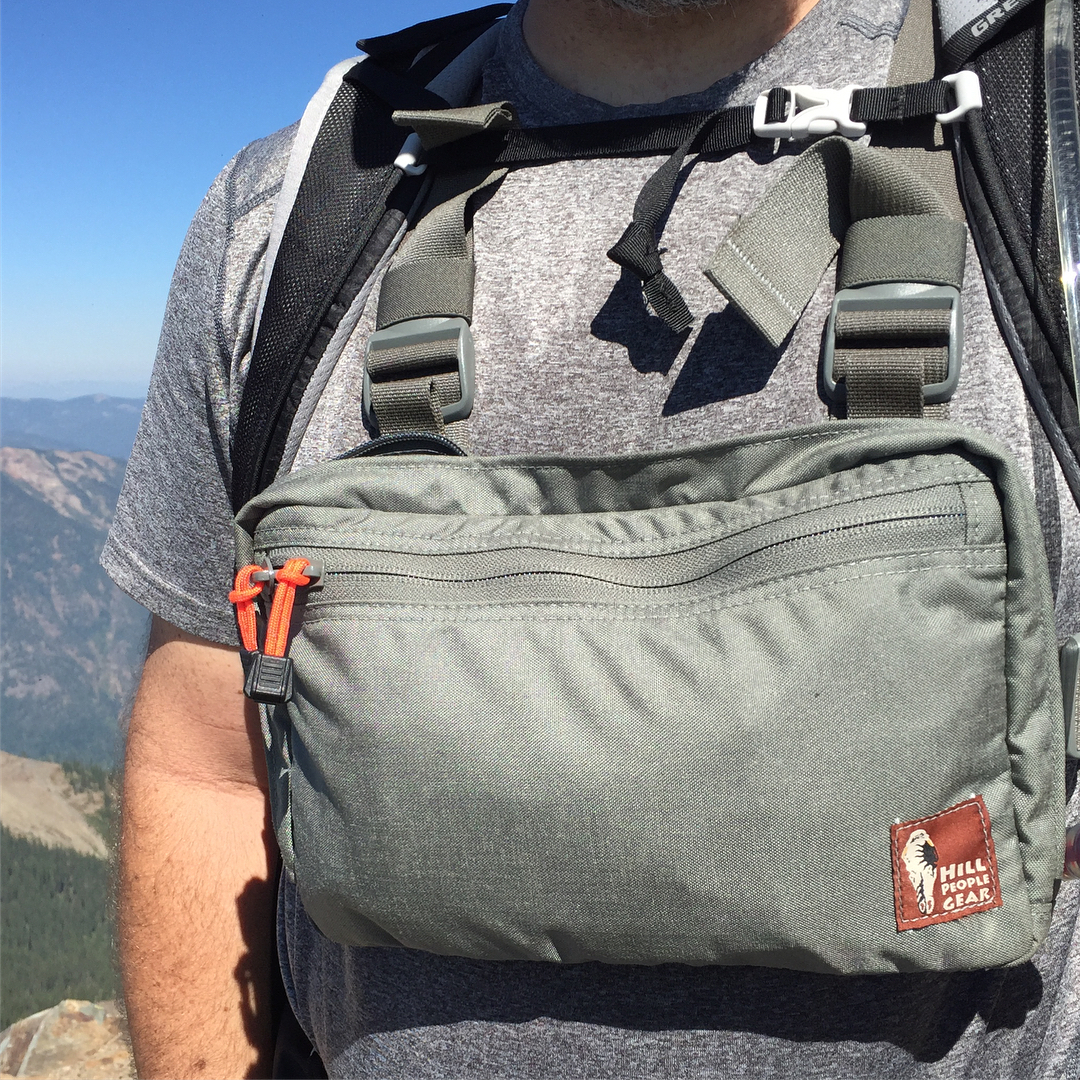
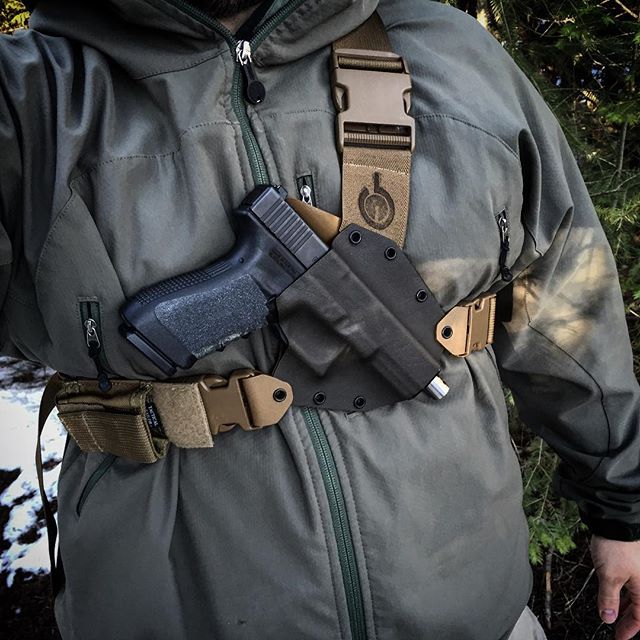
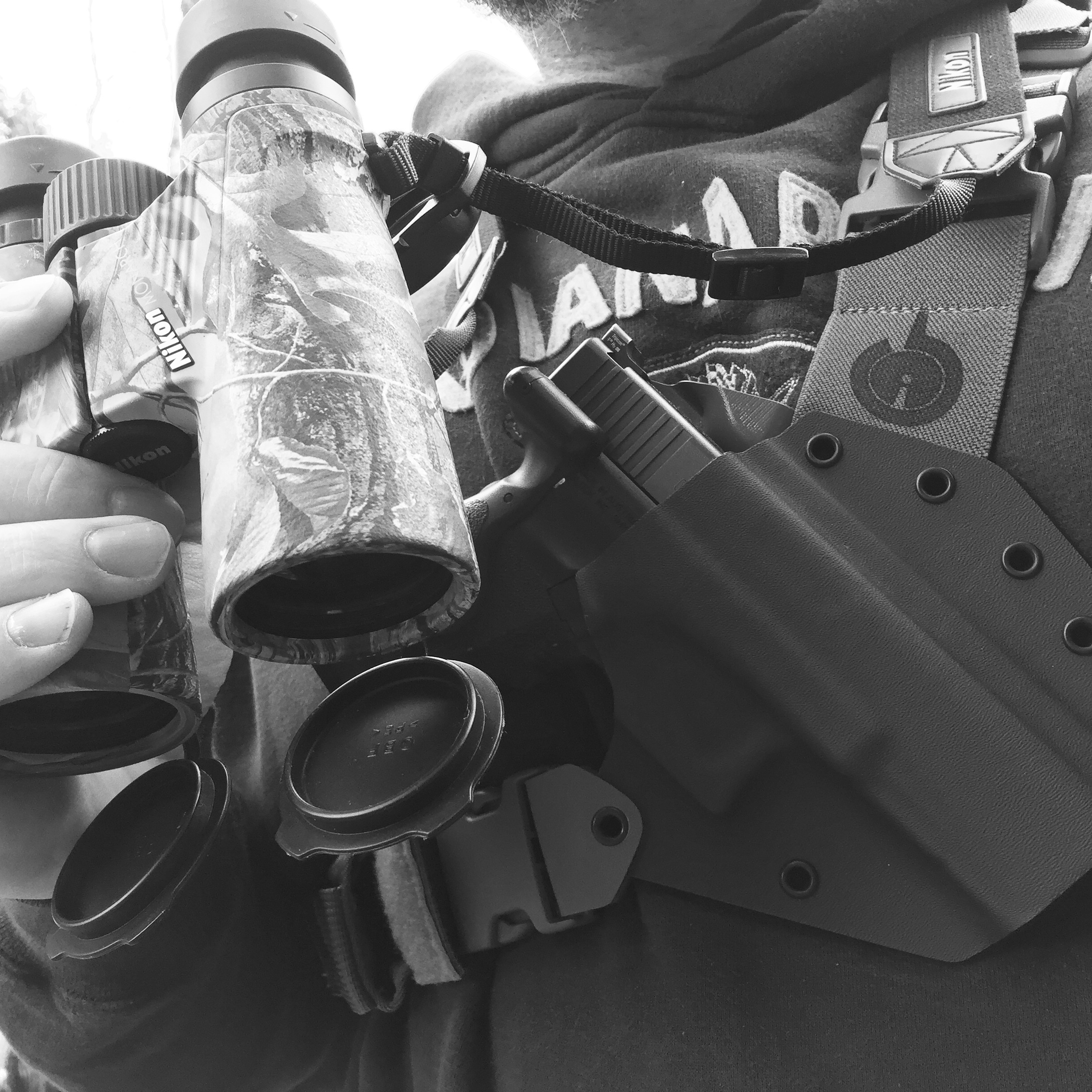
Our review of the GunfightersINC Kenai Chest Holster is one of the most visited reviews ever posted on this site and we get a number of emails asking questions about it. One of the most common questions I receive regarding the Kenai is how it compares to the Hill People Gear Kit Bag. Well, I happen to be a long time user of both and that sounds like an idea for a post to me!

Links:

Kenai Chest Holster

Hill People Gear Kit Bag

The Same but Different

At the most basic level, the Kenai and Kit Bag are similar. They are both designed to carry a handgun in the most advantageous position for many outdoor pursuits – on the chest. However, the functionality and materials used are drastically different. This leads to different strengths and weaknesses for both, enough that I have purchased and use both depending on the situation.

Both are better than tucking your handgun into your backpack or not carrying it at all!

Background with the Kit Bag

My background with the Hill People Gear Original Kit Bag is fairly long. I’ve owned one since the first or second run. This was before they added a dummy cord loop and Velcro in the handgun compartment. I simply wanted a way to carry a handgun that was comfortable and concealed while backpacking. The Kit Bag worked well for that but I never really completely filled all the carrying capacity offered by the Original Kit Bag. I eventually sold it and replaced it with a Runners Kit Bag.

The Runners Kit Bag is ideal for me. It has the same footprint as the Original Kit Bag but is slimmer overall since the “middle” cargo pocket has been removed. It is large enough to keep my full sized handgun concealed but significantly slimmer while still offering more than enough carrying capacity to carry some basics.

Background with Kenai Chest Holster

I’ve been using a Kenai Chest Holster since late 2015. I find it to be the best interpretation of a “guide holster” available. GunfightersINC used their experience in the outdoors and some modern materials to bring the guide holster concept into the current century. It is slimmer than any traditional leather guide holster could ever hope to be, offers better retention without the need for a strap, creates a better draw stroke, and its modular.

I’ve worn this holster extensively and I find it to be extremely comfortable and extremely easy to draw from. They even designed the harness so none of the adjusters had to be positioned on the back where it could catch on wader shoulder straps or cause hotspots under a backpack. This is the level of thoughtfulness that went into this holster.

Get Both!

For a long time, the Original Kit Bag was the only way I had to carry a handgun on my chest and it worked. When I added the Kenai Chest Holster to my gear bin, I wondered if it would replace my Kit Bag but it hasn’t. It has only highlighted the strengths of both carry methods.

I can’t replace the Kit Bag because it offers three important benefits over the Kenai:

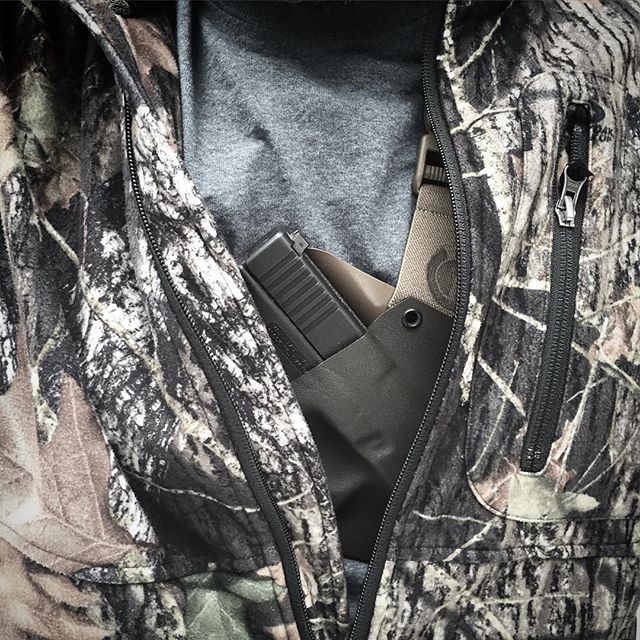
  • It can conceal a handgun without the use of a covering garment.
  • It can carry a huge variety of handguns from small to large.
  • It can carry additional items in a location that is easy to access.

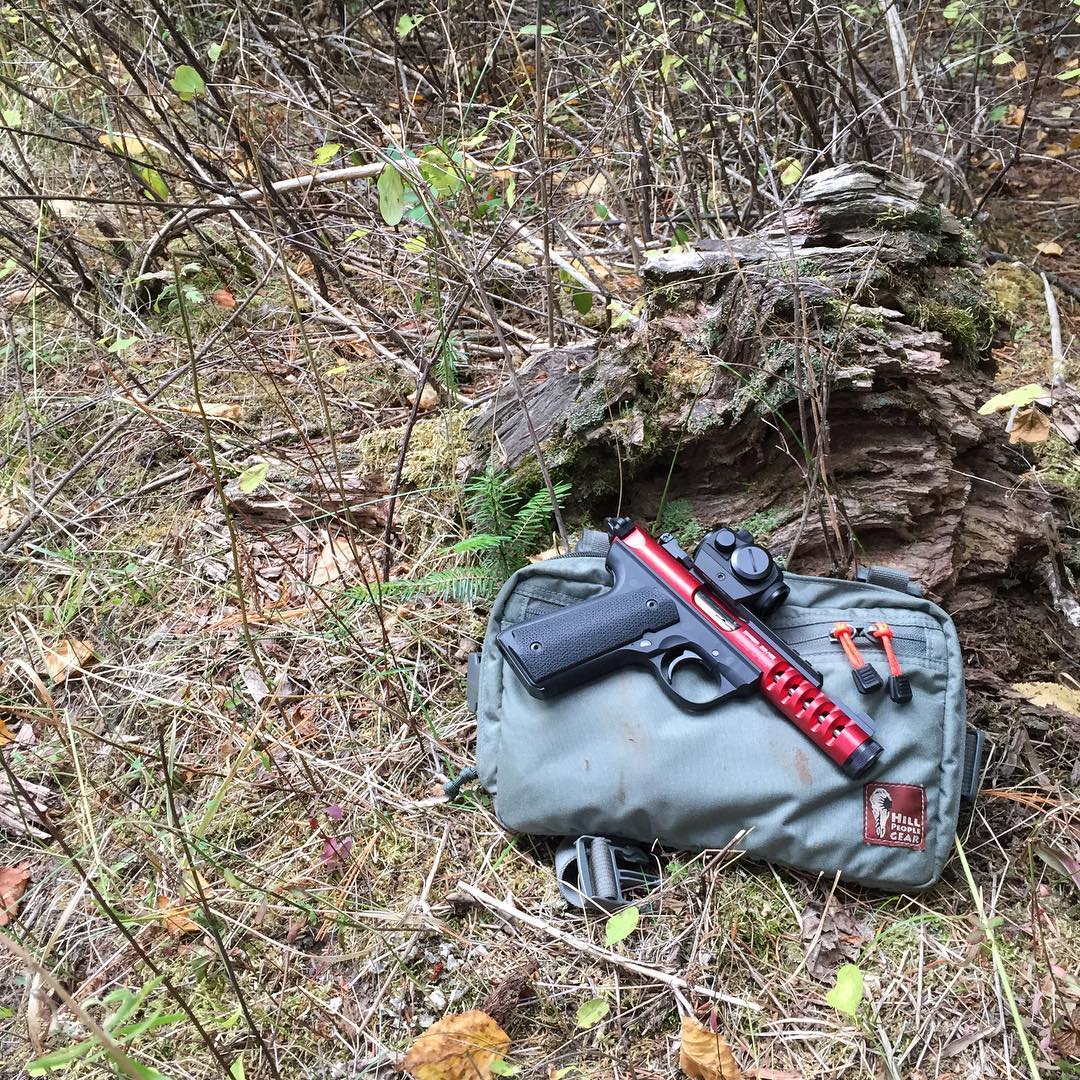
The Kenai is surprisingly concealable under a cover garment but I live in an area that sees triple digit heat in the summer. I can’t always use a covering garment. I’ve used my one Kit Bag to carry everything from a Glock 43 or J-Frame, to a Ruger 22/45 Lite with RDS, to a large frame revolver. Additionally, the Kit Bag is great for carrying items like nav tools (compass, GPS, UTM grid, etc.), basic survival goodies (lighter, some bits of tinder, etc.), and other items you may want close at hand. It may not seem like a big deal but the efficiency of reaching to your chest for gear like chapstick or a GPS unit versus having to stop and remove your pack is not trivial when you are trying to cover ground.

I can’t replace the Kenai Chest Holster because it offers three important benefits over the Kit Bag:

  • It is more compact.
  • It offers a faster, more streamlined draw stroke.
  • It is more concealable.

The Kenai Chest Holster is smaller and slimmer than the Kit Bag that makes it a little easier to dress/pack around. That also means it is cooler to wear and that can be big deal when it is 95+ with less than 15% humidity. The Kenai’s draw stroke is very fast and straightforward. There is nothing between your hand and a full firing grip on your handgun with Kenai. The Kit Bag is fast but the Kenai is faster – how much faster will depend on your specific gear and some training. Finally, if I absolutely need to conceal the fact that I am carrying and the weather permits, the Kenai conceals under a coat easily.

I live in a very rural area that is a destination for outdoor recreation. That means that we have a healthy mix of the NRA crowd and Sierra Club crowd. Our property is on the outskirts of National Forest land that contains Grizzly habitat. My choice for which carry “system” to use often comes down to balancing those factors.

If I am headed to a popular trail, I know I am more likely to encounter the Sierra Club side of the house and prefer to remain discreet in how I carry. I usually reach for the Kit Bag in that case. If I am working or hiking on our own property, I don’t have to worry about concealment and I almost always use the Kenai. If I am going on a very long day hike (or overnighter), I am more likely to reach for the Kit Bag because of the convenience of carrying important items in the outer pocket. If I am going into an area where the grapevine says there was recent bear activity, I am inclined to take the Kenai.

Wrap Up

There are always factors to balance when deciding which gear works for you. If you are knee deep in big coastal brown bears while fishing for salmon you might choose differently than you would if you were knee deep in college kids while hiking the Appalachian Trail. For me, both the Kenai Chest Holster and Hill People Gear Kit Bags have been invaluable and I am glad I have both in my gear box.

Bargain or Just Cheap? – Victorinox Paring Knives

Welcome to Bargain or Just Cheap? This series will review budget friendly knives for a variety of uses in a short format. All of the knives will cost less than $50 (in most cases, much less) and will be purchased out of my own pocket. I’ll buy them, carry them, and use them in an attempt to determine if the knife is a bargain or just cheap.


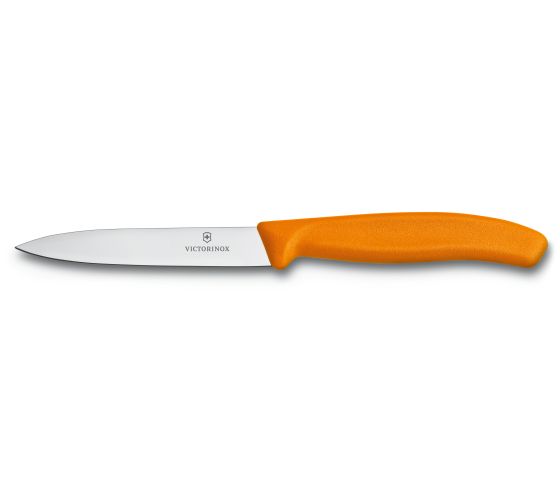
I’ve written about Victorinox Paring Knives before so its no secret that I love them. They are marketed as kitchen knives but these dirt cheap knives are useful for everything from everyday tasks, to hunting, and even self-defense.

Specs:

Handle: Polypropylene (shape and texture varies)

Blade Length: Varies

Overall Length: Varies

Weight: .9 ounce

Sheath: Not provided

Observations from Use

I own a stack of these. At around $6-8 a piece, I don’t mind keeping a stash of them on hand. I’ve been using and abusing the same 8 or 9 for at least 5 years and I have yet to break one.

I use them in the kitchen, for processing meat animals and game up to white tail deer size, for general utility tasks, for fishing, every day carry, and just about any other way you can use a knife. Are they good for batoning fire wood? No, but that doesn’t mean they are weak. You just need to be realistic with their use. At less than an ounce a piece, you can manage to carry one with a hatchet.

They are surprisingly good hunting knives and I people are often surprised to find out we use them to dress deer. Instead of worrying about sharpening your knife in the field, you just carry a handful of them. If one gets dull part way through field dressing (it probably won’t), just grab the next one. That saves time, money, and weight in your pack because a handful of these knives still weigh less than most field knives.

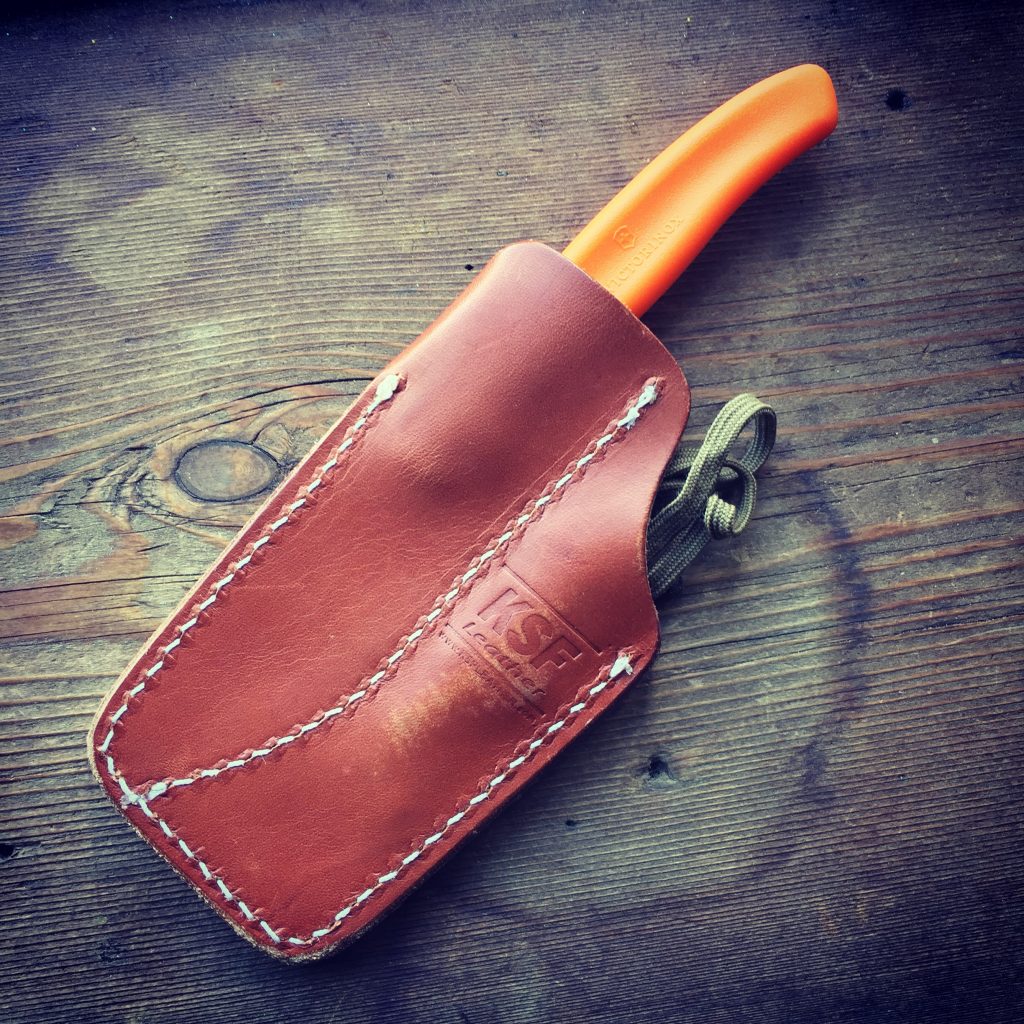
The biggest snag with keeping these knives as general purpose knives is finding a sheath but that is becoming easier now with the proliferation of kydex benders. Victorinox also offers a couple of cheap options that can be purchased separately. I use their BladeSafes which are are plastic blade covers that open like a clam shell and have small rubber pads inside that grip the blade when closed. They are secure enough to allow you to carry the knives in your pack safely, very affordable, and best of all… dishwasher safe. That makes cleaning blood, fur, and animal fat out of them a breeze. I also use a KSF Pocket Sheath to carry one almost every day.

Bargain or Just Cheap?

These knives are most certainly BARGAINS. They are dirt cheap but perform far beyond the low price would lead you to believe. As far as I am concerned, everyone should have a stash of them.

I will be using Amazon as the price base line for this series. All knives were purchased by me from Amazon: Victorinox Paring Knives on Amazon


Our goal is to represent knives for a variety of uses from EDC, to outdoor, to tactical knives. Do you have a favorite affordable knife? Let us know about it in the comments!

Bargain or Just Cheap? – RUIKE Hornet F815

Welcome to Bargain or Just Cheap? This series will review budget friendly knives for a variety of uses in a short format. All of the knives will cost less than $50 (in most cases, much less) and will be purchased out of my own pocket. I’ll buy them, carry them, and use them in an attempt to determine if the knife is a bargain or just cheap.


You would think that it would be easier to find bargain fixed blades than it is to find bargain folding knives due to the simplicity of a fixed blade knife. However, that isn’t always the case for one reason – sheaths. Most bargain knives come with terrible sheaths and by the time you replace the lousy included the sheath, the knife isn’t a bargain anymore. It takes a little digging but there are bargains out there beyond the standby Mora.

RUIKE Knives is kind of like the knife division of Fenix Lights though their affiliation with the flashlight maker isn’t always spelled out clearly on their website. They make a number of interesting and value minded knives but there is one in particular, the RUIKE Hornet F815, that drew me in several months ago.

Specs:

Steel: Sandvik 14C28N

Handle: Textured G-10

Blade length: 3.35 in.

Spine Thickness: .14 in.

Overall length: 7.48 in.

Weight: 3.7 oz.

Sheath: Injection molded

Observation from Use

I was initially drawn to the Hornet because I was looking for a full sized fixed blade knife that was both stout and lightweight. I like flat grinds and drop point blade shapes for general use. The Hornet seemed to hit all those points. It has been on several adventures since then, spending a lot of time tucked into a Hill People Gear Runner’s Kit Bag, and has served me well.

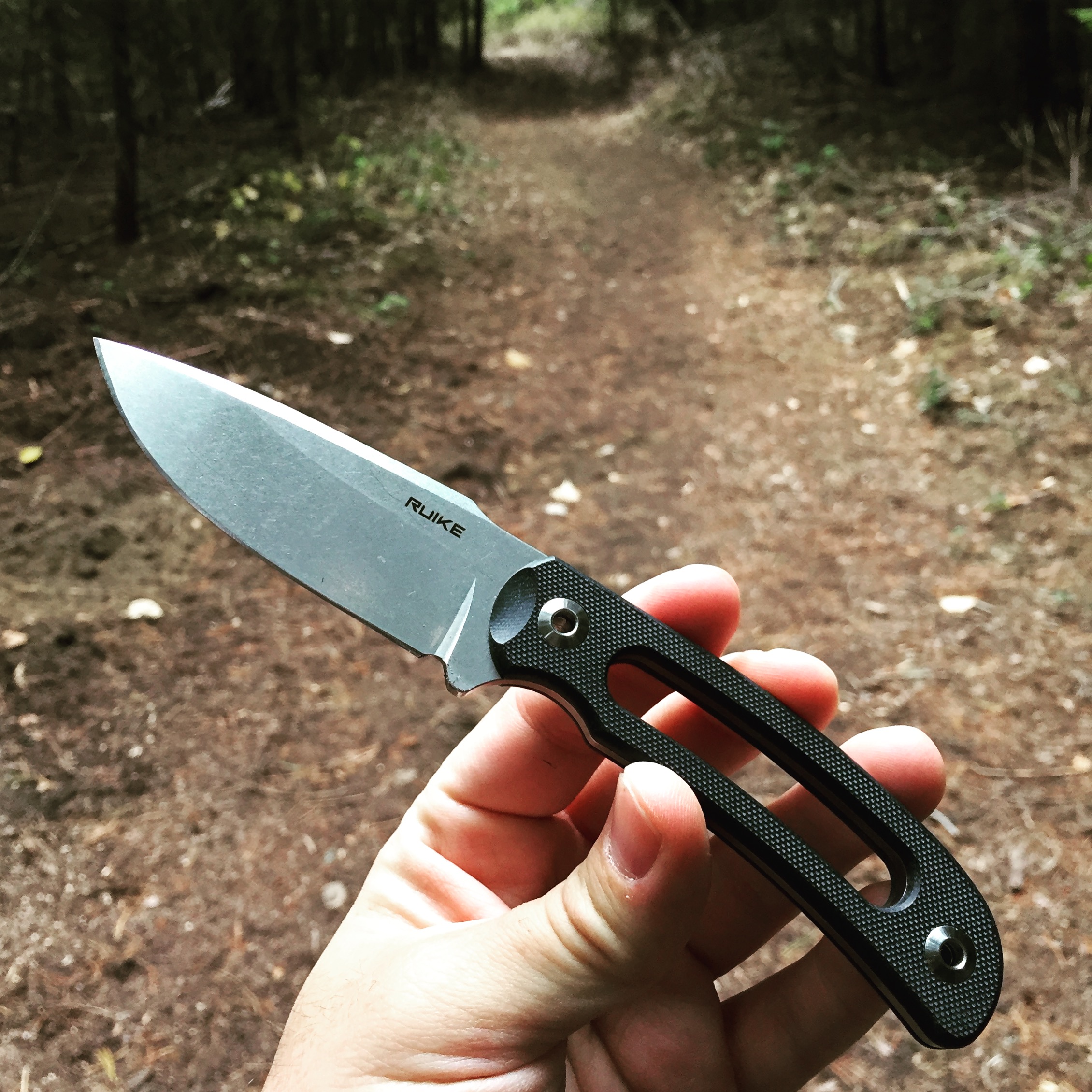
The Hornet is relatively lightweight while still offering the durability and comfort of a full tang knife with slab handles. The knife’s most distinctive feature is its skeletonized handle with textured G-10 slabs. This feature is VERY well executed. They slabs are fit to the tang very well and RUIKE even took steps to chamfer the edge of the G-10 inside the lightening cutout. The result is a knife that is lightweight for this type of construction, more comfortable to use than a knife without handle slabs, and that offers great grip even with gloves.

RUIKE uses Sandvik 14C28N at .14″ thick on the Hornet. Sandvik 14C28N is a great steel that takes a fine edge without much fuss. This knife cuts and slices well at .14″ thick and with the relatively tall, flat saber ground blade. It cuts well but is also stout enough to stand up to hard use like batoning.

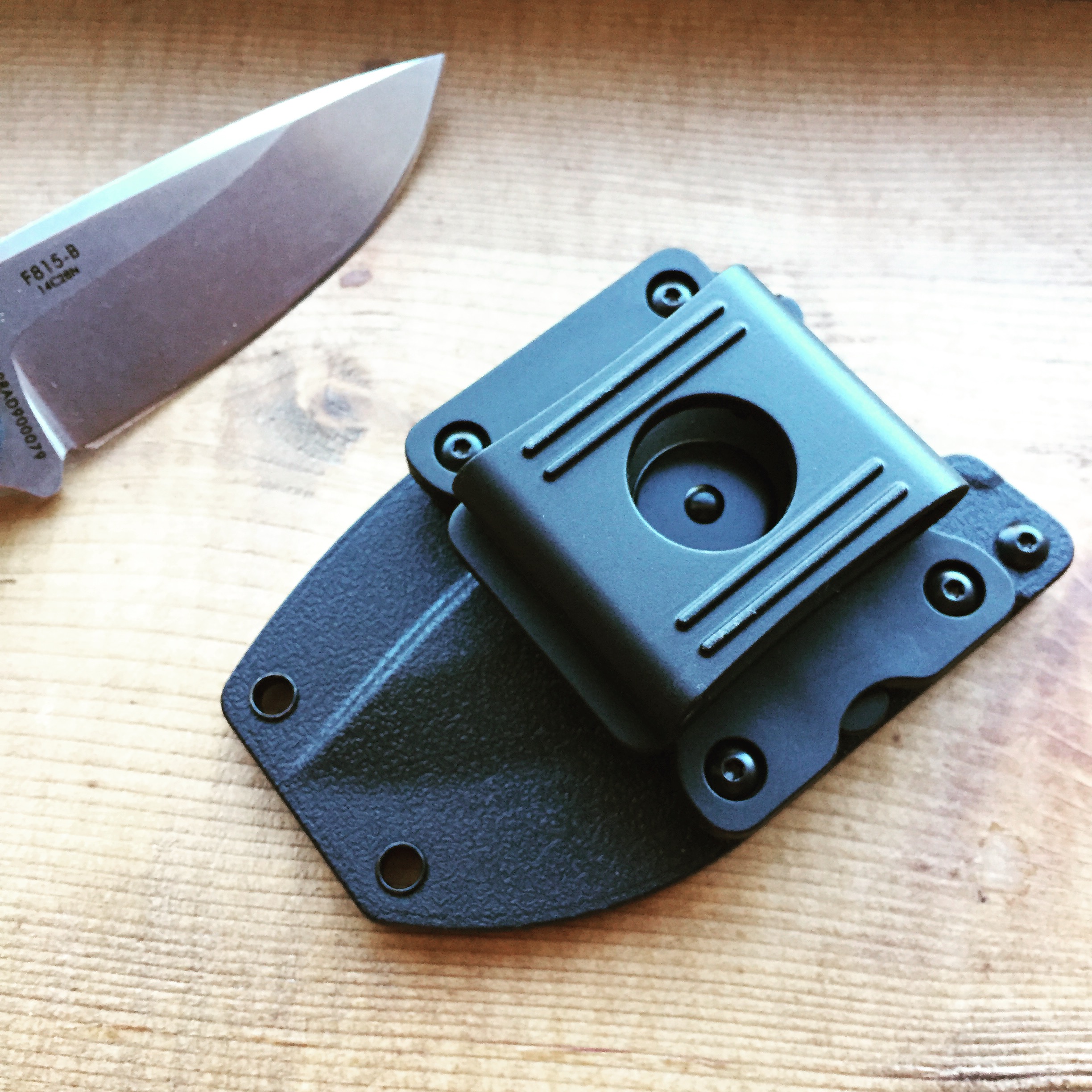
The sheath is made from injection molded plastic. Like many plastic sheaths, it is bit bulkier than a real kydex sheath would be. However, it is functional. It has adjustable retention (not often seen on injection molded sheaths) and secures the knife well. The included clip works well for belt carry and is adjustable for a number of angles. I removed the clip on mine since I generally carry it in a pack or Kit Bag.

Bargain or Just Cheap?

The RUIKE Hornet F815 bumps right up against our $50 limit for this series but it packs a lot of features not commonly found on bargain fixed blades. It is well designed. It offers a great balance of durability and lightweight. It comes with a functional sheath. It’s a good looking knife with very good fit and finish. The steel is not a bargain basement steel. I call it a BARGAIN and like this knife a lot.

I will be using Amazon as the price base line for this series. All knives were purchased by me from Amazon:

RUIKE Hornet with Black G-10

RUIKE Hornet with Orange G-10

Note: This design is also be available from Sanrenmu, who may actually be the OEM maker of the Hornet, with lower grade 8Cr14Mov steel for considerably less money. I purchased the Hornet because of the better steel and the backing of RUIKE for any potential warranty issues.


Our goal is to represent knives for a variety of uses from EDC, to outdoor, to tactical knives. Do you have a favorite affordable knife? Let us know about it in the comments!

Powered by WordPress. Designed by Woo Themes